

7 Ways to Improve Home Cooling Efficiency
Table of Contents
1. Set Your Thermostat for Summer Cooling Efficiency
Programmable and Smart Thermostat Schedules
2. Air Conditioner Filter Cleaning and Replacement
How Often to Clean or Replace Your Filter
3. Keep the Outdoor Unit Clear of Leaves and Debris
4. Clean Vents, Ducts and Indoor Coils for Better Airflow
5. Home Insulation and Cooling Efficiency: Seal the Gaps
6. Use Ceiling Fans and Window Coverings to Reduce Cooling Load
Window Heat Control: Stop the Heat Before It Gets In
Room Layout and Airflow
7. How to Reduce Air-Conditioning Costs with Smarter Habits
Habits That Actually Move the Needle
Measuring Efficiency and Savings
Safety and the Limits of DIY Maintenance
Conclusion: Start with the Cheapest Fixes First
Frequently Asked Questions
Last Updated: October 7, 2026
1. Set Your Thermostat for Summer Cooling Efficiency
Home cooling efficiency starts with one small habit: setting your thermostat to the right temperature and leaving it there. Every degree you lower the setting adds to your running costs, and most households cool their homes far more than they need to.
The best thermostat settings for summer sit between 24°C and 26°C when you're home. Each degree above 24°C can trim roughly 5 to 10 per cent off your cooling energy use, according to Sustainability Victoria's summer energy guide. That adds up fast across a long summer.
Programmable and Smart Thermostat Schedules
A fixed schedule beats constant fiddling. Set your system to start cooling 30 minutes before you get home, not the moment you walk in.
Smart thermostats take this further with geofencing. The system detects when nobody's home and eases off, then cools again as you return. If you're weighing up a smart thermostat against a basic programmable model, the smart option usually pays for itself through the cooling schedule alone.
Pro Tip Don't turn the thermostat down to 18°C to cool a room faster. Air conditioners cool at a fixed rate, so a lower setting just runs longer and costs more. Set it to your target temperature and let the system do its job.
2. Air Conditioner Filter Cleaning and Replacement
Air conditioner filter cleaning is the cheapest maintenance task you'll ever do, and it's the one most people skip. A clogged filter chokes airflow, so the blower unit works harder to push air through your home.
That means higher energy use and weaker cooling. In older systems, it can also mean a frozen coil and a service call you didn't budget for.
How Often to Clean or Replace Your Filter
Ducted and split systems: check the filter monthly during summer
Washable filters: rinse every 4 to 6 weeks, dry fully before refitting
Disposable filters: replace every 2 to 3 months, or sooner in dusty homes
Homes with pets or near dirt roads: check every fortnight
If you're not sure where your filter sits or how to remove it, ask your installer during your next service. Most filters slide out in seconds once you know the trick.
3. Keep the Outdoor Unit Clear of Leaves and Debris
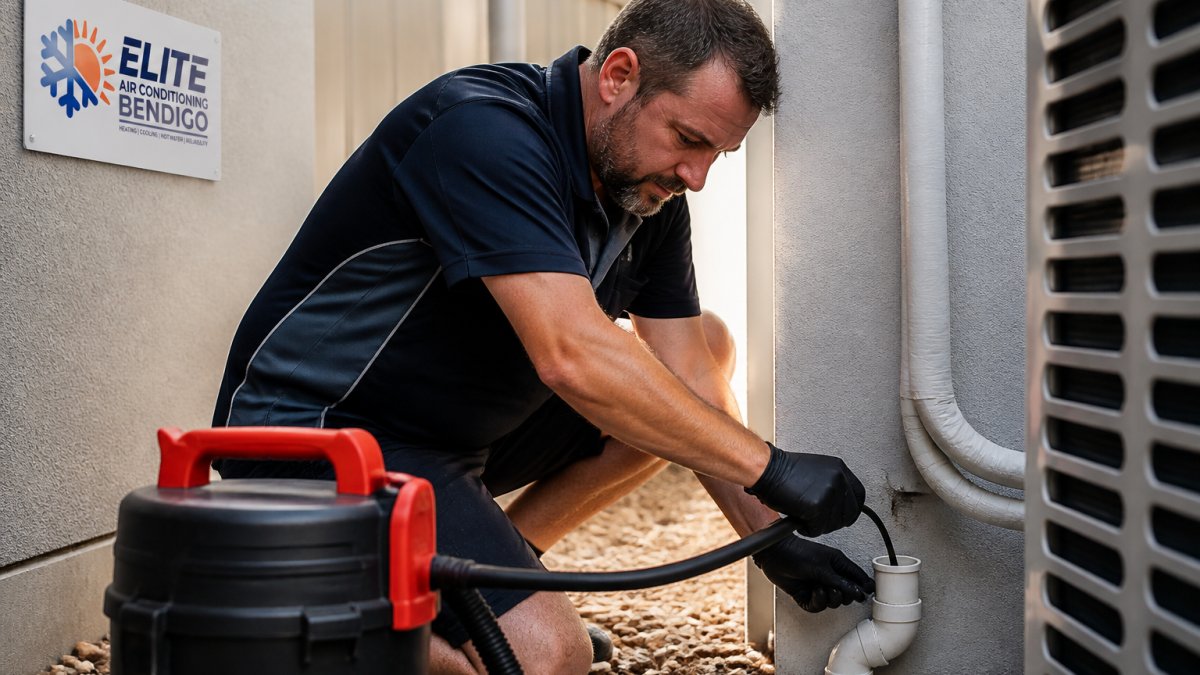
The outdoor unit releases the heat it pulls from inside your home. If leaves, grass clippings or garden debris block the condenser, that heat can't escape, and cooling performance drops.

Clear a metre of space around the unit on all sides. Trim back shrubs, sweep away leaf litter, and check the fins for bent or blocked sections.
Clearance around the unit matters more than most guides admit. A condenser boxed in by a fence or hedge will run hotter and use more electricity to do the same job.
Watch Out Never hose down the outdoor unit while it's running. Water plus live electrical components is a genuine safety risk. Switch the system off at the isolator first, and let a licensed technician handle any deep coil cleaning.
4. Clean Vents, Ducts and Indoor Coils for Better Airflow
Air vents and ducts carry cooled air to every room. When they're dusty or blocked, some rooms get cold while others stay stuffy, and your system runs longer to compensate.
Start with the simple jobs:
Vacuum vent grilles every few months
Move furniture, rugs and curtains away from vents
Check that no vent is closed in a room you actually use
Look for kinked or crushed flexible duct in the roof space
Duct cleaning is worth considering if you've never had it done. Indoor coil cleaning is a different job entirely, and it needs a technician. A dirty coil reduces cooling performance and can lead to mould growth in the unit.
5. Home Insulation and Cooling Efficiency: Seal the Gaps
Home insulation and cooling efficiency are directly linked. Insulation slows heat transfer through ceilings, walls and floors, while air sealing stops hot outside air leaking in through gaps.
Most homes lose cool air through:
Draughts around doors and windows
Unsealed wall vents and exhaust fans
Gaps around downlights and ceiling penetrations
Open fireplaces with no damper
Ceiling insulation matters most in summer, because the roof space heats up fast. If your insulation is old, compressed or patchy, topping it up is often the single best upgrade you can make. The Your Home energy efficiency guide explains how insulation ratings work and what suits different home types.
Once the envelope is sealed, your air-conditioning system doesn't have to work as hard, which extends its lifespan and cuts running costs.
6. Use Ceiling Fans and Window Coverings to Reduce Cooling Load
Ceiling fans don't cool the air. They move it across your skin, which makes you feel several degrees cooler at a fraction of the running cost of an AC unit. A ceiling fan typically draws a small fraction of the power an air conditioner uses, so running fans alongside the AC is one of the cheapest comfort wins available.
Use fans and air conditioning together, and you can raise the thermostat by 1 to 2 degrees without losing comfort. That's real electricity savings over a full summer. The catch: fans cool people, not rooms. Switch them off when you leave a room, or you're just moving warm air for no benefit.
Window Heat Control: Stop the Heat Before It Gets In
Window heat control is the other half of this strategy, and it's the part most guides gloss over. Heat enters glass in three ways: direct sunlight (radiation), hot air outside (conduction), and warm surfaces radiating inward. Each needs a different fix.
External shading first. Awnings, shutters, external blinds and deep eaves block sunlight before it touches the glass. This is far more effective than internal blinds, because once sunlight passes through glass, the heat is already inside.
Internal blinds and curtains second. Close them on sun-facing windows during the day. Heavy, close-weave curtains with a pelmet or track that seals at the edges work better than thin venetians.
Reflective window film. Useful on west-facing glass that cops late-afternoon sun, but it reduces visible light and can void some window warranties, so check before installing.
Night purge ventilation. When the outside temperature drops below your indoor temperature, open windows and use a fan to flush warm air out. This only works if you have security screens or can safely leave windows open.
A common pattern is that west- and north-facing glass drives most of the afternoon heat gain. Walk your home at 3pm in summer and note which windows feel hot to the touch, those are your priority for shading.
Room Layout and Airflow
Room layout plays a part too. Furniture placement can block airflow from vents, and a couch pushed against a return air grille will strangle the whole system. Keep at least a clear gap around supply vents and never box in the return air grille. If a room always feels stuffy, check whether a curtain, door or piece of furniture is deflecting the supply air before you blame the system.
Pro Tip Pair fans with shading and you can often delay switching the AC on by an hour or more on mild days. That's the cheapest cooling you'll ever get.
7. How to Reduce Air-Conditioning Costs with Smarter Habits
Knowing how to reduce air-conditioning costs comes down to habits, not gadgets. Small daily choices add up to real savings across the season, but only if you can see them working.
Habits That Actually Move the Needle
Set a nighttime temperature of 25°C to 26°C, and use a timer or sleep mode so the system eases off overnight.
Shut doors to rooms you're not cooling, and close off unused zones if your system supports it.
Run the dishwasher, washing machine and dryer in the cooler part of the day, ideally before 10am or after 8pm.
Check your water heater temperature, since water heating is often the second-biggest energy user in a home.
Compare your electricity and gas plans once a year, loyalty rarely pays, and switching plans is free.
Use the AC's dry or dehumidify mode on humid days instead of dropping the temperature further.
Occupancy schedules matter here. If everyone's out between 9am and 5pm, there's no point cooling an empty house to 22°C. A programmable or smart thermostat handles this automatically.
Measuring Efficiency and Savings
Most cooling advice stops at the tip. The gap is measurement. You can't manage what you don't track.
Read your meter. Take a reading at the same time each day for a week, then compare a week with your new habits against a baseline week. The difference is your real saving, not an estimate.
Check your bill's usage graph. Most retailers show daily or hourly usage in their app or portal. Look for the spike on hot afternoons, that's your cooling load.
Use a plug-in energy meter on portable units or fans to see exactly what they draw.
Compare like with like. Weather varies, so compare a mild week to a mild week, not a heatwave to a cool spell.
A common pattern is that filters, thermostat settings and shading deliver the first noticeable drop in usage, while insulation and sealing deliver the bigger, slower gains.
Safety and the Limits of DIY Maintenance
Some jobs are safe for most homeowners. Others need a licensed technician, and getting the line wrong can void warranties or create real hazards.
Safe to do yourself:
Cleaning or replacing filters
Vacuuming vent grilles
Clearing leaves and debris from around the outdoor unit
Sealing draughts around doors and windows
Adjusting thermostat schedules
Call a professional:
Any work involving refrigerant, gas or electrical components
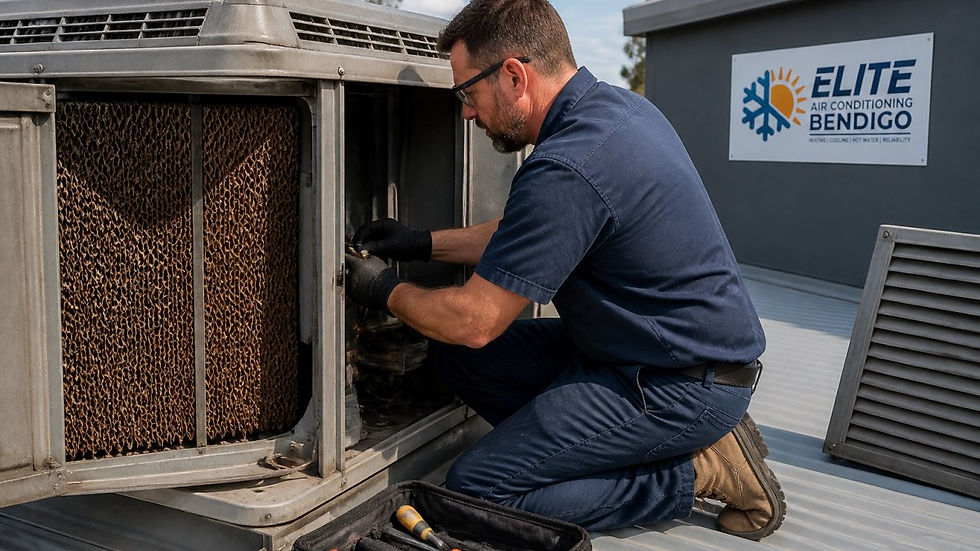
Deep coil cleaning on the outdoor unit
Duct repairs or replacement in the roof space
Any job where you'd need to remove panels on a live system
Watch Out Never open the outdoor unit's electrical panel or hose it down while it's running. Refrigerant handling is also regulated, and only licensed technicians can legally work on it. If in doubt, stop and call someone qualified.
Conclusion: Start with the Cheapest Fixes First
Improving home cooling efficiency doesn't require a new system on day one. Start with the free wins: filters, thermostat settings, clearance around the outdoor unit and smarter daily habits.
If your home still struggles, or your system is old and undersized, it may be time for expert advice. At Elite Air conditioning Bendigo, we offer impartial advice across all major brands, expert design and load calculation, and free on-site quotes. We also handle point-of-sale VEU government rebates and a free electricity and gas bill comparison.
Get started with Elite Air conditioning Bendigo.
Frequently Asked Questions
Is it cheaper to run the air conditioner all day or just at night?
Running your air conditioner only when you need it is cheaper than leaving it on all day. Use a programmable or smart thermostat to start cooling 20 to 30 minutes before you arrive home, rather than running it continuously while the house is empty. For overnight cooling, a higher temperature setting combined with a ceiling fan lets you sleep comfortably while using less energy than daytime cooling.
What temperature should I set my air conditioner to in summer?
Set your thermostat to around 25 to 26 degrees Celsius when you are home and awake, and raise it a few degrees when you are out or asleep. Each degree you raise the setting can reduce energy use by roughly 5 to 10 percent. If you have ceiling fans, you can set the thermostat even higher because moving air feels cooler on your skin without lowering the actual room temperature.
Do ceiling fans help reduce air-conditioning costs?
Yes, when used correctly. Ceiling fans circulate air and create a wind-chill effect that makes a room feel 2 to 3 degrees cooler, so you can raise your thermostat without losing comfort. Fans cost far less to run than an air conditioner. Remember to turn fans off when you leave the room, because they cool people, not spaces, and running them in an empty room wastes electricity.
How often should I clean or replace my air-conditioner filter?
Check your filter every month during summer. Clean or replace it at least every 1 to 3 months, and more often if you have pets, live near unpaved roads, or run the system daily. A clogged filter restricts airflow, forces the blower unit to work harder, and drives up energy use. Cleaning or replacing the filter is one of the cheapest ways to protect cooling performance and extend system lifespan.
Request a Quote

Comments