

Energy Efficient Climate Control Systems: 2026 Guide
Table of Contents
How Energy-Efficient Climate Control Systems Cut Power Consumption
Reverse-Cycle Air Conditioning vs Other HVAC Systems: Efficiency Comparison
Inverter vs Non-Inverter Air Conditioning Efficiency: Which Saves More?
VEU Rebate Eligibility for Air Conditioning Upgrades
HVAC System Maintenance Tips 2026: Keep Efficiency High
What actually degrades efficiency
A practical annual routine
Why this matters beyond the power bill
The maintenance angle most guides miss
When to repair versus replace
Choosing an Energy-Efficient Climate Control System for Your Home or Business
Lifecycle cost analysis: the framework most guides skip
Regulatory and standards context
Integration with smart building and home ecosystems
Residential versus commercial: what changes
Conclusion: Next Steps for Energy-Efficient Climate Control in 2026
Frequently Asked Questions
Last Updated: September 15, 2026
How Energy-Efficient Climate Control Systems Cut Power Consumption
Energy-efficient climate control systems reduce power consumption by matching output to actual demand rather than running at full capacity. In practice, that means inverter compressors, zoning, and better insulation working together instead of a single oversized unit cycling on and off all day.
This guide from Elite Air conditioning Bendigo breaks down how these systems work, which upgrades qualify for Victorian Energy Upgrades rebates, and how to compare options before you commit. The core argument is simple: most homes in the Bendigo region don't need a bigger system, they need a correctly sized one.
Heating and cooling typically accounts for the largest share of household energy use in Australia, according to the Australian government's energy.gov.au household energy guidance. That makes climate control the single highest-use area for cutting bills.
Below, we'll show you exactly how to evaluate a system before you buy, and why the cheapest quote is rarely the cheapest outcome.
Reverse-Cycle Air Conditioning vs Other HVAC Systems: Efficiency Comparison
Reverse-cycle air conditioning is the most energy-efficient option for most Australian homes because it moves heat rather than generating it. A reverse-cycle split system can deliver several units of heating or cooling for every unit of electricity consumed, which is why it outperforms resistive electric heaters by a wide margin.
Here's how the main system types compare:
System Type | How It Works | Relative Efficiency | Best For |
Reverse-cycle split | Moves heat via refrigerant | Highest | Most homes, room-by-room control |
Evaporative cooling | Cools via water evaporation | High (dry climates) | Dry heat, open-plan homes |
Ducted gas heating | Burns gas to heat air | Moderate | Existing ducted homes |
Resistive electric | Heats element directly | Lowest | Rarely the best choice |
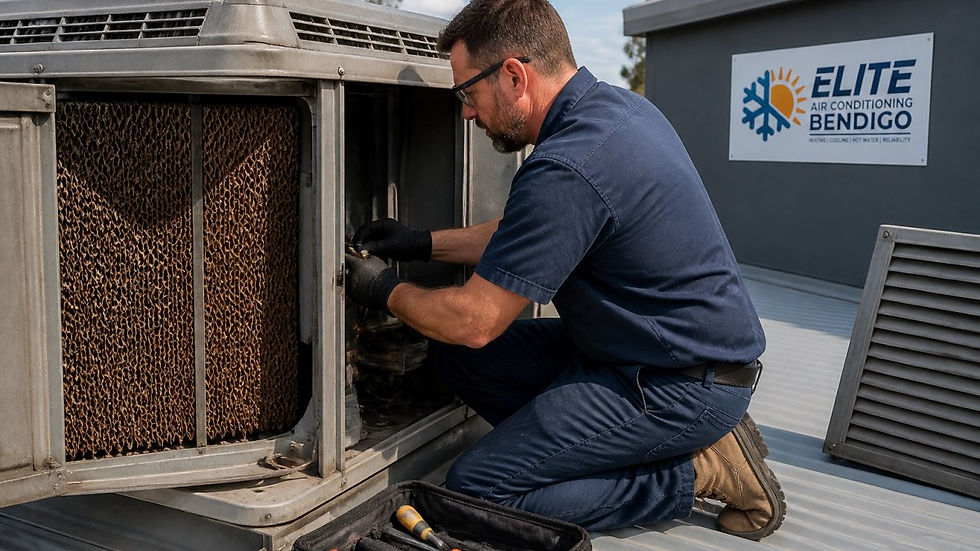
Evaporative cooling performs well in dry conditions but loses effectiveness in humid weather. Gas ducted heating is convenient but ties you to gas supply and rising tariffs.
The practical takeaway: if you're replacing an old system, reverse-cycle is usually the strongest starting point. Elite Air conditioning Bendigo offers a free electricity and gas bill comparison service to show what the switch would actually mean for your running costs.
Inverter vs Non-Inverter Air Conditioning Efficiency: Which Saves More?
Inverter air conditioning is more efficient than non-inverter because it varies compressor speed continuously instead of switching fully on and off. A non-inverter unit runs at 100% until the room hits the set temperature, then stops, then restarts. That cycling wastes energy and creates temperature swings.
An inverter compressor ramps up to reach temperature, then settles into a low, steady output to hold it. The result is steadier thermal comfort, quieter operation, and lower power consumption over long run times.
Where non-inverter units still make sense:
Rooms used briefly and rarely
Tight upfront budgets where the unit won't run for hours
Backup or occasional-use spaces
For a living room or main bedroom used daily, the inverter premium usually pays back through lower running costs. The one drawback is higher purchase price, which is exactly where rebates help.
VEU Rebate Eligibility for Air Conditioning Upgrades
Victorian Energy Upgrades (VEU) rebates reduce the upfront cost of eligible, energy-efficient air conditioning and heat pump systems. Eligibility depends on the system's efficiency rating, the type of upgrade, and the property, and the program's rules and incentive amounts change over time.
Because rebate values and eligibility criteria are updated regularly, check the current details directly with the Victorian Energy Upgrades program before budgeting. Elite Air conditioning Bendigo handles the paperwork at point of sale, so you're not left navigating the application alone.
Pro Tip The most common rebate mistake is buying the wrong efficiency tier. A system that misses the eligible threshold by a small margin can cost you the entire incentive, so confirm the model's rating before you sign anything.
HVAC System Maintenance Tips 2026: Keep Efficiency High
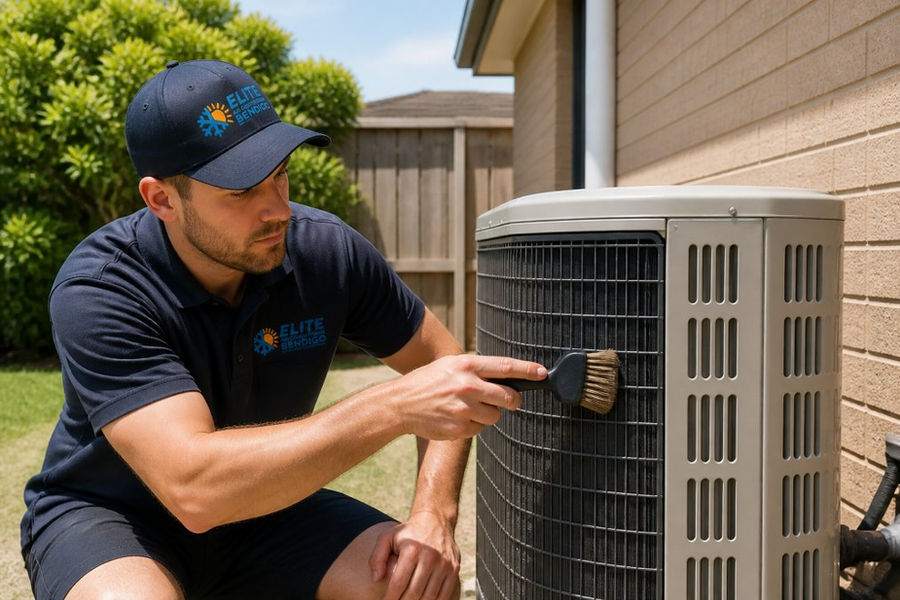
Regular maintenance keeps an efficient system running at its rated efficiency. A dirty outdoor coil or clogged filter forces the compressor to work harder, which shows up directly on your power bill.
What actually degrades efficiency
Refrigerant charge drift. Small leaks reduce the charge, which lowers the system's coefficient of performance (COP) and forces longer run times.
Dirty condenser and evaporator coils. Dust, pollen and grass clippings insulate the coil and reduce heat transfer. The outdoor coil needs a rinse every few months during heavy use.
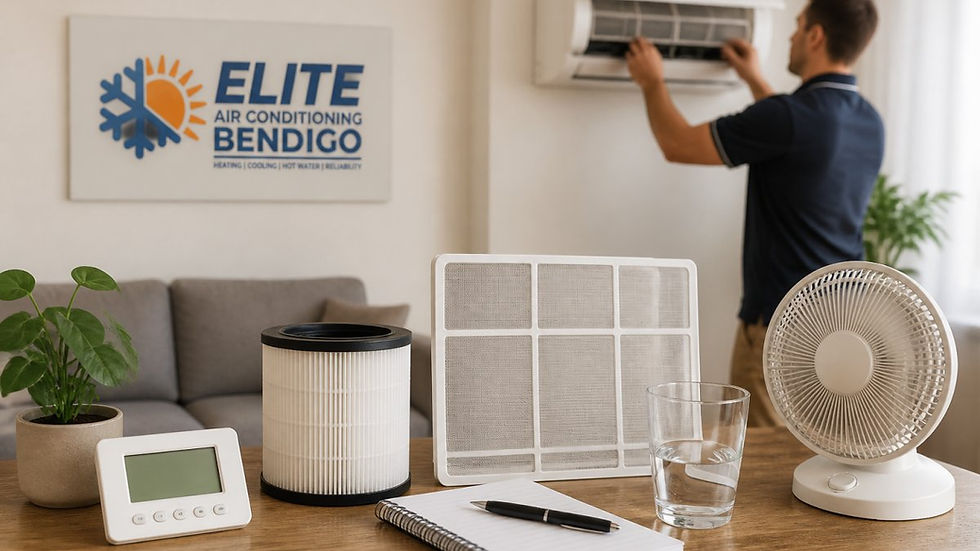
Filter loading. A clogged filter restricts airflow, which can ice the evaporator and drop capacity. Clean or replace every 1-3 months in heavy-use periods, more often in dusty or pet-heavy homes.
Duct leakage. In ducted systems, leaks in the ceiling or underfloor can waste a significant share of conditioned air before it reaches the room.
Thermostat and sensor drift. A sensor reading 1-2°C off will make the system run longer than needed.
A practical annual routine
Clean or replace filters every 1-3 months during heavy use.
Clear debris from the outdoor unit and keep at least 300 mm of clear airflow around it.
Check refrigerant lines for damage, oil traces or frost.
Have a licensed technician service the system before peak summer and winter, this is also when refrigerant handling and any electrical work must be done by a licensed tradesperson under state and territory licensing rules.
Seal gaps around doors, windows and ceiling penetrations to reduce load.
Review the system's controls schedule each season; a schedule that suited a household two years ago may now be heating empty rooms.
Why this matters beyond the power bill
Preventative maintenance extends equipment life. It also protects the warranty, most manufacturers require evidence of servicing by a licensed technician, and a warranty claim on a neglected unit is commonly refused.
Pro Tip Keep a simple log of service dates, filter changes and any refrigerant work. When you sell the property or make a warranty claim, that log is the difference between a quick approval and a dispute.
The maintenance angle most guides miss
Maintenance is not just about efficiency, it is also about refrigerant containment. Refrigerants used in modern reverse-cycle systems have a global warming potential (GWP) hundreds to thousands of times that of carbon dioxide, and a slow leak over years has a climate impact that outweighs the electricity the system saves. Under Australia's ozone and synthetic greenhouse gas legislation, refrigerant handling must be done by a licensed technician, and refrigerant must be recovered rather than vented. Choosing a system that uses a lower-GWP refrigerant, and keeping it leak-free, is one of the most under-discussed sustainability levers in home climate control.
When to repair versus replace
A common pattern is to keep repairing a system past its economic life. As a rule of thumb, if the repair quote exceeds roughly a third of the cost of a comparable new unit, or if the system is more than 10-12 years old, replacement usually wins on lifecycle cost. That calculation belongs in the next section.
Choosing an Energy-Efficient Climate Control System for Your Home or Business
The right system starts with a proper load calculation, not a guess based on floor area. A load calculation assesses insulation, window orientation, ceiling height, glazing type, occupancy and how each room is actually used.
Watch Out Oversizing is the most expensive mistake in climate control. An oversized unit reaches temperature too fast, switches off, then restarts repeatedly. That cycling wears the compressor and leaves rooms feeling clammy rather than comfortable.
Lifecycle cost analysis: the framework most guides skip
Key Takeaway If two quotes differ by more than about 20% upfront, run the LCCA before deciding. The cheaper unit is only cheaper if you barely use it.
Regulatory and standards context
Integration with smart building and home ecosystems
Residential versus commercial: what changes
Factor | Residential | Commercial |
Primary driver | Comfort and running cost | Compliance, tenant comfort, asset value |
Load calculation | Room-by-room, occupancy-based | Whole-building, diversity factors, after-hours zones |
Controls | App, thermostat, zoning | BMS, BACnet, scheduled and demand-based |
Refrigerant choice | Lower-GWP preferred | Often specified by sustainability rating target |
Lifecycle horizon | 10-15 years, tied to ownership | 15-25 years, tied to depreciation and fitout cycles |
Conclusion: Next Steps for Energy-Efficient Climate Control in 2026
Frequently Asked Questions
What is the most energy-efficient climate control system for a home?
Reverse-cycle air conditioning with inverter technology is currently the most energy-efficient option for most homes. Inverter systems adjust compressor speed to maintain temperature, using less power than non-inverter units that cycle on and off. Pairing a properly sized system with zoning and smart thermostat automation reduces power consumption further. For heating, heat pump technology outperforms electric resistance heaters by a wide margin. Always check the energy rating label and ensure a professional load calculation before choosing a system.
How do I know if I'm eligible for a VEU rebate on air conditioning?
VEU rebate eligibility for air conditioning depends on factors like the system type, its energy rating, and whether it replaces an existing inefficient unit. The program is administered by the Victorian Energy Upgrades scheme. An accredited provider can confirm your eligibility and handle the paperwork. Rebates are available at point of sale for qualifying products, which reduces upfront costs. Ask your installer for a free on-site assessment to check if your planned upgrade meets the criteria.
What is the $5000 rule for HVAC systems?
The 'rule' is a general guideline suggesting that if a repair costs more than 30% of the cost of a new system, replacement may be more cost-effective. It's not a formal regulation but a helpful benchmark. For older systems with poor energy ratings, replacing them with a high-efficiency model can lower power bills and may qualify for VEU rebates. Always get a professional assessment to compare repair versus replacement costs.
How does regular HVAC maintenance improve energy efficiency?
Regular maintenance keeps components clean and lubricated, allowing the system to run with less strain. Dirty filters restrict airflow, forcing the system to work harder and use more power. A technician will clean coils, check refrigerant levels, and test thermostat calibration. Annual servicing before summer and winter helps maintain peak efficiency, extends equipment life, and prevents costly breakdowns. It also ensures your system continues to meet energy rating expectations.
Request a Quote

Comments