

Expert Heating Advice Bendigo: 7 Steps to Cut Bills
Table of Contents
Step 1: Get an Expert Heating Assessment Before You Spend a Cent
Step 2: Check Your VEU Rebate Eligibility
How the Rebate Actually Works
Products That Typically Qualify
What the Paperwork Actually Involves
Other Programs Worth Checking
Step 3: Match Your System to Your Home and Local Climate
Why Sizing Beats Brand Every Time
What a Proper Load Calculation Looks At
Comparing the Main Options
The Local Climate Factor Most Guides Miss
Step 4: Follow These Evaporative Cooling Maintenance Tips
Step 5: Decide Between Heating System Repair vs Replacement
Step 6: Set Up Zoning and a Preventative Maintenance Schedule
Step 7: Read Your Energy Bills and Lock In the Savings
Where to Get Expert Heating Advice in Bendigo
Frequently Asked Questions
Last Updated: September 21, 2026
Step 1: Get an Expert Heating Assessment Before You Spend a Cent
The smartest money you'll spend on heating is often the money you don't spend yet. Before buying anything, get an on-site assessment of your home. A proper assessment looks at your insulation, window glazing, ceiling height, floor plan and existing system. It shows where heat escapes and where a new unit will struggle.
A good assessment answers three questions:
How much heating and cooling capacity does your home actually need?
Where should the unit sit for even airflow?
Which system type suits your layout and budget?
Watch Out Buying a system before a load calculation is done often means oversizing or undersizing. Both cost you money: one wastes power, the other never gets comfortable.
Step 2: Check Your VEU Rebate Eligibility
Most top-ranking heating guides skip the rebate conversation entirely, which is a costly omission for anyone upgrading a system. The Victorian Energy Upgrades (VEU) program is the main incentive scheme for households replacing inefficient heaters, and it can meaningfully reduce the upfront cost of a heat pump or reverse-cycle split system. The Victorian Energy Upgrades program sets the rules for what qualifies, and those rules change between program versions, so always confirm current eligibility before you sign a quote.
How the Rebate Actually Works
The VEU is a certificate-based scheme, not a cash grant. Accredited installers create Victorian Energy Efficiency Certificates (VEECs) when they install an eligible product, then surrender those certificates to the scheme. The value of the certificates is passed to you as a discount at the point of sale. That is why the discount amount can move week to week: it tracks the market price of certificates, not a fixed government rate.
Products That Typically Qualify
Eligible upgrades generally fall into these categories:
Replacing an old electric resistance heater with a reverse-cycle split system
Replacing an old gas or electric heater with a heat pump
Heat pump hot water systems replacing electric or gas storage units
High-efficiency ducted reverse-cycle systems in some circumstances
The new product must meet a minimum efficiency rating, and the old system must be decommissioned and disposed of correctly. Installing a new system in a home that never had one usually does not qualify, because the scheme is designed around upgrades, not new installs.
What the Paperwork Actually Involves
An accredited installer handles the rebate at the point of sale. You should not need to lodge anything with the government yourself. What you do need to check:
The installer's VEU accreditation number, which you can ask for before signing
That the quoted discount is shown as a separate line item on the quote
That the old unit is listed for decommissioning and removal
That you receive a compliance certificate after installation
Pro Tip Ask your installer for their accreditation number before you sign. If they can't provide one, the rebate may not be claimable.
Other Programs Worth Checking
Beyond the VEU, some households may be eligible for additional support through energy retailer hardship programs or state concession schemes administered by the Department of Families, Fairness and Housing. These are separate from the VEU and are means-tested. A good installer will flag them but will not process them for you.
Watch Out Rebate values and eligible product lists change with each program version. A quote that was valid three months ago may not reflect current certificate values. Always ask for a fresh eligibility check before committing.
Step 3: Match Your System to Your Home and Local Climate
The right system for a home in this region is the one sized for its climate and layout, not the one with the biggest brand name. Winters here bring frequent overnight drops toward freezing, and summer afternoons regularly push past 35°C. That swing matters: a system sized only for summer cooling will struggle to heat on a cold morning, and one sized only for winter will short-cycle in mild weather.
Why Sizing Beats Brand Every Time
An undersized unit runs constantly and never reaches the set temperature. An oversized unit cycles on and off, which wastes energy and wears out parts faster. A correct load calculation fixes both problems. It measures your rooms, insulation, window area, ceiling height and orientation to find the exact capacity you need.
What a Proper Load Calculation Looks At
A room-by-room load calculation should account for:
Floor area and ceiling height of each room
Insulation levels in ceiling, walls and floor
Window size, glazing type and orientation
Air leakage around doors, windows and downlights
Local design temperatures for both winter and summer
Number of occupants and any heat-generating appliances
The output is a kilowatt figure for heating and a separate figure for cooling. These are often different, and the larger of the two should drive the unit selection.
Comparing the Main Options
System | Best For | Key Strength | Watch Out For |
Reverse-cycle split system | Single rooms, open plans | Heats and cools, low running cost | Draughty rooms lose efficiency fast |
Hydronic heating | Whole-home warmth | Even, quiet heat, no draughts | Slow to warm up, higher install cost |
Ducted reverse-cycle | Whole-home with zoning | Zoned control, one outdoor unit | Duct losses in older homes |
Evaporative cooling | Dry summer heat | Low energy use in dry air | Not a heating solution |
Hydronic heating suits homes wanting consistent warmth across every room and performs well in cold overnight conditions because it does not rely on moving large volumes of air. Split systems win on flexibility and running cost, and modern inverter models hold efficiency well down to low single digits. Your layout, insulation and budget decide which fits best.
The Local Climate Factor Most Guides Miss
The sizing question here is not just about peak temperature. It is about how quickly the house loses heat overnight. A well-insulated home may only need the system to maintain temperature, while a poorly sealed one asks the unit to recover several degrees every morning. That recovery load is what drives oversizing, and it is why draught sealing and ceiling insulation often deliver a better return than a larger unit.
Key Takeaway Size for the larger of your heating and cooling loads, then fix draughts and insulation before you upsize. A smaller unit in a tight house beats a bigger unit in a leaky one.
Step 4: Follow These Evaporative Cooling Maintenance Tips
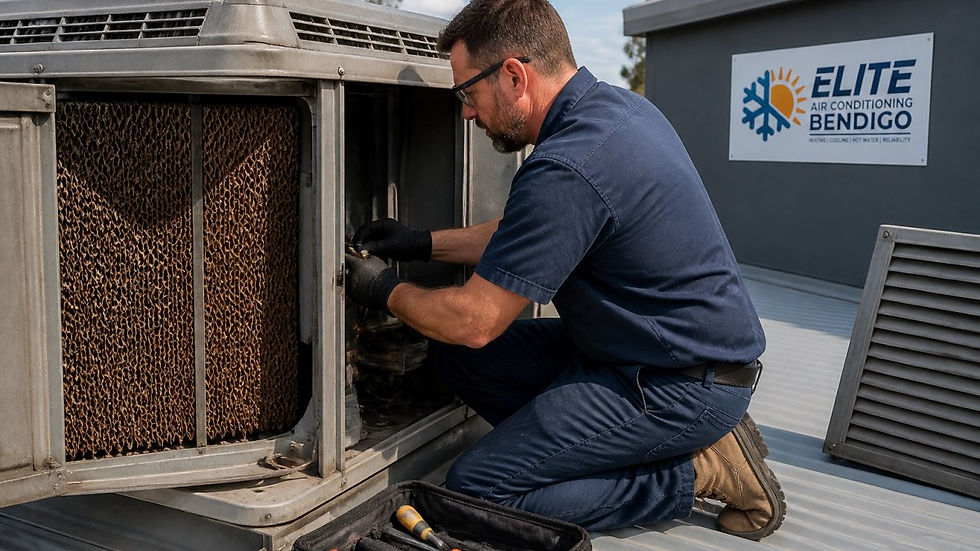
Evaporative cooling maintenance tips matter most before summer starts. A neglected unit loses efficiency fast, and dusty pads push warm, damp air into your home. A simple pre-season service keeps it running well.

Do these tasks each spring:
Replace or clean the filter pads
Flush the water reservoir and check for algae
Clear debris from the unit and vents
Test the pump and fan before the first hot day
Book a professional service if the unit is over five years old
Step 5: Decide Between Heating System Repair vs Replacement
The repair vs replacement call comes down to age, repair cost and efficiency. If your system is over ten years old and needs a major fix, replacement usually wins. Older units use more energy, and parts get harder to source.
Key Takeaway Repair if the unit is under ten years old and the fix is minor. Replace if it's older, inefficient, or facing a major repair bill.
Step 6: Set Up Zoning and a Preventative Maintenance Schedule
Zoning lets you heat only the rooms you use, which cuts energy consumption. Close doors to unused rooms, or install zone dampers on a ducted system. Pair zoning with a schedule and you stop paying to heat empty space.
Step 7: Read Your Energy Bills and Lock In the Savings
Your energy bill tells you whether your upgrades worked. Compare the same month year on year to see real change. Look at usage in kilowatt hours, not just the dollar total, so price changes don't confuse you.
Track these each season:
Total usage in kWh
Peak vs off-peak split
Running cost of heating vs cooling
Any jump that signals a fault
Where to Get Expert Heating Advice in Bendigo
Impartial advice is harder to find than it should be. Many sellers push the system that pays them the most, not the one your home needs. That's the gap Elite Air conditioning Bendigo was built to fill.
Frequently Asked Questions
Are government rebates available for heating upgrades?
Yes. The Victorian Energy Upgrades program offers incentives on eligible heat pumps, electric hot water systems and other efficient appliances. Your VEU rebate eligibility depends on the product, its efficiency rating and who installs it, since only accredited providers can issue the certificates that fund the discount. Ask for the rebate to be applied at the point of sale rather than claiming it yourself later, and get the paperwork confirmed in writing before you sign anything.
Is it better to repair or replace an old heating system?
Work through three questions. How old is the unit, how often has it needed repairs in the past two years, and how do your winter bills compare with a new system's running costs? A single cheap fix on a unit with years left is usually worth doing. Repeated repairs on an ageing system, or one that no longer heats the whole house evenly, usually means replacement is the better spend, especially when a rebate offsets part of the upfront cost.
What are the benefits of professional heating consultations?
A proper consultation includes a room-by-room load calculation, which is how a technician works out the heating capacity your home actually needs. Without it, you risk an oversized system that cycles constantly or an undersized one that never gets ahead of the cold. You also get honest guidance on system types, honest advice on running costs, and a free quote you can compare against others before committing.
How can I improve my home's energy efficiency during winter?
Start with the cheap fixes before touching the thermostat. Seal gaps around doors and windows, close curtains before dusk, and set your heating to a steady temperature rather than blasting it morning and night. Zone your home so you heat the rooms you use, keep filters clean so airflow is not restricted, and book a preventative maintenance service before the first cold snap. Together these cut energy consumption without any equipment upgrade.
Heating a home well takes more than picking a unit off a shelf. It takes a proper assessment, the right capacity, and a plan to keep it running. Elite Air conditioning Bendigo handles all three, with impartial advice across all major brands, expert load calculations, and point-of-sale VEU rebates. Get started with Elite Air conditioning Bendigo and lock in comfort that lasts all year.
Request a Quote


Comments