

Heat Pump Hot Water System Cost 2026: What to Expect
Table of Contents
Heat Pump Hot Water System Cost 2026: What Drives the Price
How Heat Pump Hot Water Systems Work and Why It Matters for Your Bill
VEU Rebate Hot Water System: How to Reduce Your Upfront Cost
Heat Pump vs Gas Hot Water Efficiency: Running Costs Compared
Best Heat Pump Hot Water Brands 2026: What to Look For
Installation Requirements and Retrofitting Challenges
Total Cost of Ownership Over 10 Years
Conclusion: Getting an Accurate Quote for Your Home
Frequently Asked Questions
Last Updated: October 4, 2026
Heat Pump Hot Water System Cost 2026: What Drives the Price
Working out the heat pump hot water system cost 2026 homeowners actually pay comes down to four variables: unit size, brand tier, installation complexity, and how much you claw back through rebates. Two homes on the same street can see quotes differ by thousands of dollars for what sounds like the same job.
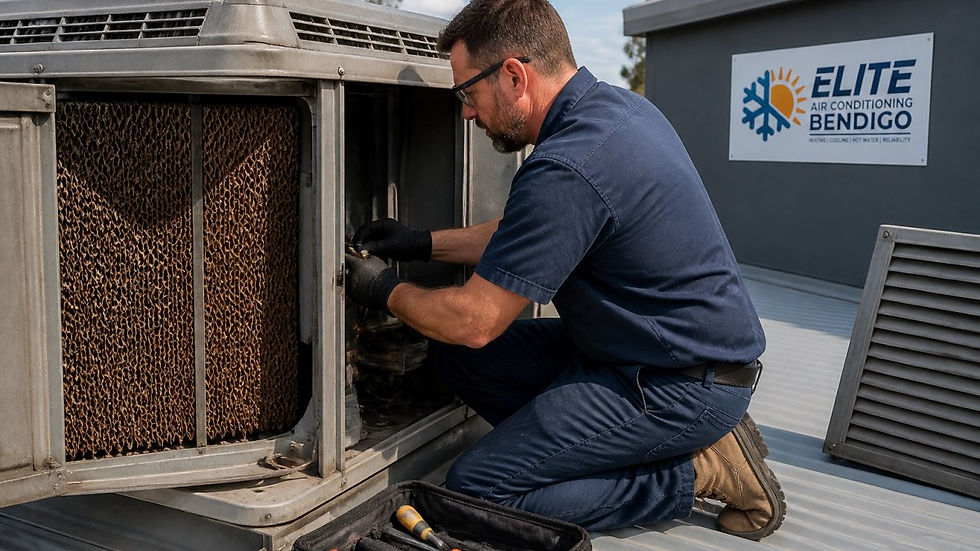
At Elite Air conditioning Bendigo, we quote these systems every week, and the pattern is consistent. Tank capacity drives the base price, because a five-person household needs a larger storage cylinder than a two-person one. Retrofitting an older property adds labour: new plumbing runs, a dedicated electrical circuit, and sometimes a concrete plinth. The unit's energy efficiency rating, measured by its coefficient of performance (COP), also separates budget models from premium ones.
Here's the part most quotes gloss over: the sticker price is only half the story. Government rebates, running costs, and system longevity decide whether the investment stacks up. Below, we break down what each factor adds to your total, and where the real savings hide.

How Heat Pump Hot Water Systems Work and Why It Matters for Your Bill
A heat pump hot water system is a unit that moves heat from the surrounding air into a water tank rather than generating heat directly, which is why it uses far less electricity than a traditional element.
The technology works like a reverse refrigerator. A fan draws ambient air across an evaporator coil containing refrigerant, which absorbs heat even on cool days. A compressor raises that heat to a usable temperature, and it transfers to the water via a condenser. Because the system moves heat instead of creating it, efficiency climbs sharply. A COP of 4 means the unit delivers four units of heat for every one unit of electricity consumed.
That efficiency rating is the number to check on any spec sheet. Higher COP means lower running costs, but it also means a higher upfront price. The trade-off pays off over time, which is why the efficiency rating matters more than the purchase price for most households.
VEU Rebate Hot Water System: How to Reduce Your Upfront Cost
The Victorian Energy Upgrades program is where the biggest upfront savings come from, and a VEU rebate hot water system claim can shave a meaningful amount off your quote.
Solar Choice
The scheme works through small-scale technology certificates (STCs) and Victorian energy efficiency certificates, which are created when you install an eligible system. Your installer discounts the certificate value at the point of sale rather than making you chase the paperwork. Eligibility depends on the unit's efficiency, the fuel it replaces, and current program rules, which change over time.
This is where a lot of homeowners get stuck. The rebate rules are updated regularly, and the certificate value shifts with the market. Rather than quoting a figure here that could be stale, check the current rates directly at Victorian Energy Upgrades program. We handle the point-of-sale rebate paperwork for our clients so the discount lands on the invoice, not in a rebate queue.
Watch Out A common mistake is buying a cheap unit that fails the program's efficiency threshold, which forfeits the entire rebate. Always confirm a model's eligibility before signing, not after installation.
Heat Pump vs Gas Hot Water Efficiency: Running Costs Compared
Heat pump vs gas hot water efficiency is not a close contest on running costs, and the gap widens as gas prices rise.
A heat pump typically runs at 300% to 400% efficiency because it moves heat rather than burning fuel. Gas storage systems convert most of their energy into heat but lose some up the flue, and they depend on a fossil fuel whose price you cannot control. Over a year, that efficiency difference shows up on every bill.
System Type | Efficiency | Running Cost Trend | Best For |
Heat pump | 300-400% (COP 3-4) | Lowest | Energy conscious households |
Electric storage | ~100% | Highest | Low upfront budget |
Gas storage | 80-90% | Rising with gas prices | Existing gas connections |
Off-peak electricity tariffs and a smart controller push heat pump running costs lower still. By heating water overnight or during solar generation, you shift load away from peak pricing. That load shifting is where the real savings compound.
Best Heat Pump Hot Water Brands 2026: What to Look For
Choosing among the best heat pump hot water brands 2026 comes down to four specs that actually change your experience: COP, tank material, noise output, and the split between tank and compressor warranty. Most buyers only check the first one, then regret it.
COP rating. Aim for 3.5 or higher. A COP of 4 means the unit delivers four units of heat per unit of electricity. Budget models often sit around 3.0-3.5; premium models reach 4.0-5.0 in favourable conditions. The higher the COP, the lower your running costs, but the higher the sticker price.
Tank material. Stainless steel resists corrosion better than vitreous enamel, particularly in hard-water areas. Vitreous enamel tanks are cheaper but typically have shorter warranties and are more prone to failure in areas with high mineral content.
Noise emission levels. This is the spec most buyers ignore and then regret. Heat pumps are not silent, the fan and compressor produce a continuous hum. Most residential units sit in the 40-55 dB range at one metre, which is roughly the difference between a quiet library and a normal conversation.
Warranty split. Compare the tank warranty against the compressor warranty separately. A long tank warranty with a short compressor warranty signals a cheaper compressor; the reverse signals a cheaper tank. Look for at least 5-7 years on the tank and 5 years on the compressor as a baseline, with premium units offering longer.
COP rating: aim for 3.5 or higher for strong efficiency
Tank material: stainless steel for corrosion resistance in hard-water areas
Noise emission levels: check decibels if the unit sits near a bedroom or boundary
Warranty: compare tank and compressor cover separately, not as a single figure
We give impartial advice across all major brands rather than steering you toward one. The right unit depends on your household size, climate, noise sensitivity, and budget, not a sales target. Ask for the spec sheet on any model you are quoted, and check the dB rating and warranty terms before you compare prices.
Installation Requirements and Retrofitting Challenges
Retrofitting an existing home is where quotes diverge most, and it is the factor homeowners underestimate. Two identical units on the same street can attract quotes that differ by thousands of dollars purely because of what the installer finds behind the wall.
What a standard install needs. A compliant location with airflow around the unit, a dedicated electrical circuit, and plumbing that meets current standards. The unit also needs a level base, either a concrete plinth or a suitable mounting frame, and clearance from walls, fences, and windows so the fan can draw air freely.
Where retrofit costs blow out. Older weatherboard and brick-veneer homes often need one or more of the following:
Electrical circuit upgrade. Many older homes have switchboards that cannot support a dedicated circuit for the heat pump. A new circuit, safety switch, or switchboard upgrade can add meaningful labour and parts to the quote.
New plumbing runs. If the existing hot water service is in a different location to the new unit, pipework needs to be rerouted. Long runs increase both materials and labour.
Concrete plinth or mounting frame. Ground-mounted units need a stable, level base. If the ground is uneven or the unit is going on a wall, a frame or plinth is required.
Relocation for noise or airflow. A unit tucked in a cold, shaded corner works harder than one in a sheltered, sun-exposed spot. If the only compliant location is near a bedroom or boundary, you may need to relocate the unit or choose a quieter model.
Climate-specific performance. Heat pumps work in cool conditions, but efficiency drops as ambient temperature falls. In colder regions, sizing and placement matter more, a unit that performs well in mild coastal conditions may struggle through a frosty inland winter. Humidity is the other variable: in humid climates, the evaporator coil can frost or collect condensation, and units with defrost cycles handle this better. Ask your installer how the model performs in your specific climate, not just the national average.
Noise and placement. Noise emission levels matter if the unit sits near a living area or a neighbour's boundary. Most residential units run at 40-55 dB at one metre. A well-sited unit runs more efficiently and lasts longer than the same model crammed against a wall.
Pro Tip Place the unit where it catches morning sun and has clear airflow. A well-sited unit runs more efficiently and lasts longer than the same model crammed against a wall.
The retrofit checklist. Before you accept a quote, confirm: Is the electrical circuit adequate? Is the location compliant for airflow and noise? Is the base level and stable? Does the model perform in your climate? A good installer will walk you through each of these on site, not after the unit is delivered.
Total Cost of Ownership Over 10 Years
Total cost of ownership is where heat pumps win, and it is the calculation most buyers never run.
Add the upfront cost, subtract rebates, then add ten years of running costs, maintenance, and the odds of replacement. A cheaper electric storage system costs less on day one but bleeds money every quarter through high running costs. A heat pump costs more upfront, then pays that back through lower bills and a longer service life. Factor in rising gas prices and the gap widens further. The upfront number is the least important figure in the decision.
Conclusion: Getting an Accurate Quote for Your Home
Generic price ranges will not tell you what your home will actually cost, because every property is different. The only accurate figure comes from an on-site assessment that accounts for your layout, household size, and rebate eligibility.
Elite Air conditioning Bendigo offers free on-site quotes, expert design and load calculations, and point-of-sale VEU rebates handled for you. We also run a free electricity and gas bill comparison so you can see the running-cost difference before you commit. Get started with Elite Air conditioning Bendigo and get a heat pump quote built around your home, not a template.
Frequently Asked Questions
What is the estimated cost to install a heat pump hot water system in 2026?
The total heat pump cost depends on the unit size, your home's existing plumbing and electrical setup, and whether a circuit upgrade is needed. Government rebates through the VEU program can reduce the upfront installation cost, but the exact figure varies by household. Elite Air conditioning Bendigo offers free on-site quotes and a bill comparison service so you can see the real numbers for your property before committing.
How do VEU rebates impact the total cost of a heat pump installation?
The Victorian Energy Upgrades program provides point-of-sale rebates that come off the purchase price of eligible heat pump hot water systems. These rebates are calculated using small-scale technology certificates (STCs) and the system's energy efficiency rating. The higher the coefficient of performance (COP), the larger the rebate. Elite Air conditioning Bendigo handles the paperwork and applies the rebate at the point of sale, so you don't pay upfront and wait for reimbursement.
What are the disadvantages of a heat pump hot water system?
Heat pumps cost more upfront than a standard electric or gas system. They also need adequate space for airflow around the unit and can be louder than a traditional tank. In colder climates, performance drops when ambient temperature falls below freezing, and the electric boost may kick in, raising running costs. Proper sizing, placement, and a smart controller help manage these issues. Plumbing compliance and noise emission levels should be checked before installation.
How much can I expect to save on energy bills with a heat pump in 2026?
Running costs depend on your household size, hot water usage, and electricity tariff. A heat pump typically uses significantly less electricity than a resistive electric system because it moves heat rather than generating it. Off-peak electricity tariffs and load shifting can cut costs further. Elite Air conditioning Bendigo's free bill comparison service shows how your current gas or electric hot water costs stack up against a heat pump for your specific usage pattern.
Request a Quote


Comments