

Why My Energy Bills Are High: A Practical Guide
Table of Contents
Common Reasons Your Energy Bills Are High
How Your Billing Cycle and Meter Reading Affect Costs
Appliance Efficiency and Usage Patterns That Drive Up Bills
Why your tariff turns the same appliance into a different cost
Use a smart plug or energy monitor to find the real culprit
Quick wins that actually move the number
HVAC System Maintenance Tips 2026
The mechanism: why a neglected system costs more
A maintenance checklist that targets the bill, not just the unit
What a professional service should actually include
VEU Rebates for Air Conditioning: A Practical Option
How to Run a Step-by-Step DIY Energy Audit
Getting Expert Help With High Energy Bills
Frequently Asked Questions
Last Updated: September 17, 2026
Common Reasons Your Energy Bills Are High
If your energy bills are high, the cause is usually one of a few things: a billing cycle covering more days than you expect, an estimated meter reading, a heating or cooling system working harder than it should, or a tariff that no longer matches how your household uses power. This guide walks through each cause and how to fix it.
How Your Billing Cycle and Meter Reading Affect Costs
Your billing cycle is the period your provider measures your electricity consumption. If that period is longer than usual, your bill will look higher even when your daily usage has not changed. Most households get a bill every 90 days; a cycle that stretches to 100 days adds real cost. An estimated bill happens when your provider cannot access your meter and guesses your usage based on past habits, if your circumstances changed, the estimate will be wrong.
Here is the fix:
Check the "read type" on your bill. It will say actual or estimated.
Compare the dates. Count the days in the billing period.
If it says estimated, submit your own reading through your provider's app or website.
Ask for a billing adjustment once the real reading is confirmed.
Appliance Efficiency and Usage Patterns That Drive Up Bills
Heating and cooling usually drives the biggest share of household electricity consumption, followed by hot water. But "use less power" is useless advice until you know which appliance is actually moving your meter, and when. Two hidden culprits matter more than most people realise.
Why your tariff turns the same appliance into a different cost
Under a time-of-use tariff, your provider splits the day into peak, shoulder, and off-peak windows. The exact hours vary by distributor and state, so check your bill or your retailer's plan page. The same kilowatt-hour costs more inside the peak window, so shifting a load, dishwasher, washing machine, dryer, pool pump, EV charging, from peak to off-peak cuts its cost without changing how you live.
Use a smart plug or energy monitor to find the real culprit
Most guides stop at "check your appliances." A smarter approach is to measure them. Inexpensive plug-in energy monitors and smart plugs sit between the appliance and the wall socket and log actual consumption over days, turning guesswork into a ranked list.
A practical sequence:
Put a monitor on the fridge for a week. Fridges run 24/7, so small inefficiencies compound fastest here.
Move it to the hot water system, then the heating or cooling unit, then the dryer.
Compare each appliance's weekly kWh against the others. The biggest number is your priority, not the one that feels oldest.
Cross-check the timing against your tariff windows. An appliance that runs mostly in peak is a bigger target than one that runs overnight.
Quick wins that actually move the number
Switch off appliances at the wall when not in use, but only after you have measured, so you know which ones matter.
Run heavy appliances outside peak windows if you are on a time-of-use tariff.
Check fridge and freezer door seals with the paper test: close the door on a sheet of paper and pull. If it slides out easily, the seal is failing.
Replace old halogen bulbs with LEDs, the saving is real but usually smaller than heating, cooling, or hot water.
Set the hot water thermostat to a sensible temperature rather than the maximum.
Your usage patterns and household occupancy shape all of this. A house empty during the day but heated all day pays for comfort nobody uses; four people showering at 7am pay peak rates for hot water whether anyone planned it or not.
Pro Tip Measure before you spend. A $30 plug-in monitor often reveals that the appliance you were about to replace is not the one driving your bill, and the one you ignored is.
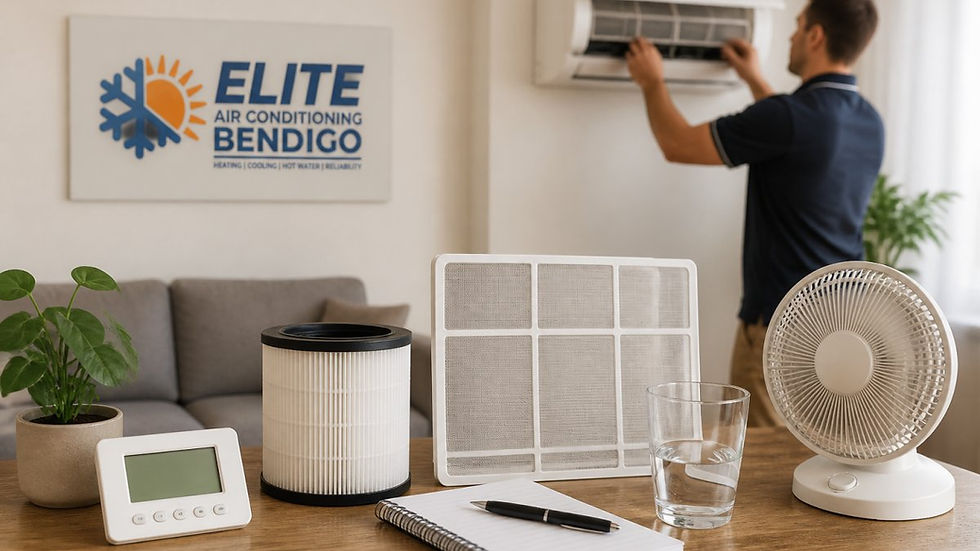
Key Takeaway The two levers that matter most are what is drawing power and when it draws it. Fix the biggest load first, then shift what you can out of peak. Everything else is rounding. HVAC System Maintenance Tips 2026 HVAC system maintenance tips 2026 start with one rule: a dirty system works harder and costs more to run. Clean filters, clear vents, and a serviced unit all reduce power consumption, but the reason matters more than the rule, because it tells you which maintenance pays back. The mechanism: why a neglected system costs more Thermal efficiency drops when filters clog. Air struggles to move across the coil, so the system runs longer to hit the same temperature. On a reverse-cycle air conditioner, a blocked filter lowers suction pressure and can ice up the outdoor unit, forcing a defrost cycle that heats nothing, energy leakage in plain terms, paying for runtime rather than comfort. A gas ducted heater behaves differently but the logic is the same: a dirty return-air filter starves the burner of airflow, the heat exchanger overheats, and short cycling wastes gas and wears the fan motor. A maintenance checklist that targets the bill, not just the unit Clean or replace filters every 1-3 months in heavy-use periods. This is the single highest-return task and takes minutes. Clear outdoor units of leaves, grass clippings, and debris. Restricted airflow raises condensing temperature and power draw. Check the condensate drain. A blocked drain can trip a safety switch and shut the system down mid-cycle. Inspect the outdoor fan blade for damage. A bent blade is noisy and less efficient. Look at the insulation on refrigerant lines. Perished insulation is a cheap fix that protects performance. Seal gaps around windows and doors. This protects insulation in the building envelope, not the unit, but it is often the cheapest saving available. Book a professional service before summer and winter, not during the first heatwave when everyone else is queuing. What a professional service should actually include A worthwhile service is not just a filter change. Ask what is being checked: Request a Quote → Refrigerant pressures and superheat/subcool, to confirm the charge is correct. Electrical connections and capacitor condition, since a failing capacitor makes the compressor draw more current. Voltage fluctuation under load, which can indicate a supply problem rather than a unit problem. Thermostat calibration, because a thermostat reading two degrees off makes the system run longer. A written report of readings, so you can compare year on year. A common mistake is only servicing the system when it breaks. Pre-season servicing catches small faults before they become expensive repairs and before they show up on your bill. If your system is more than ten years old, ask the technician to compare its running cost against a modern equivalent, the gap is often larger than people expect.
Watch Out Do not assume a service will fix a system that is undersized for the home. If the unit was specified for a smaller floor area or a milder climate, no amount of maintenance will make it efficient. That is a design problem, not a maintenance one.
VEU Rebates for Air Conditioning: A Practical Option
VEU rebates for air conditioning can offset a large share of the cost of upgrading to a more efficient system. The Victorian Energy Upgrades program offers incentives for eligible heating and cooling upgrades, though the paperwork puts a lot of people off, eligibility depends on your system type, your property, and the current program rules.
What to do:
Check your current system's age and efficiency rating.
Confirm which upgrades are eligible under the current scheme.
Ask your installer to handle the rebate at point of sale.
Keep your paperwork in case of a follow-up audit.
Watch Out Do not assume your old system qualifies for a rebate. Eligibility rules change, and installing before you confirm can mean missing the incentive entirely.
How to Run a Step-by-Step DIY Energy Audit
A DIY energy audit is a room-by-room check of what is using power in your home. It takes about an hour and needs only a notebook and access to your meter.

Total time: about 60 minutes Difficulty: beginner
What you'll need:
Your last two or three bills
A notebook and pen
Access to your meter box
Getting Expert Help With High Energy Bills
Some causes you can fix yourself. Others need a professional eye. If your audit points to an aging or undersized heating and cooling system, expert advice pays off. Elite Air conditioning Bendigo offers free on-site heating and cooling quotes, expert design and load calculation, and a free electricity and gas bill comparison service. We give impartial advice across all major brands, so you get the system that suits your home, not a sales target.
Frequently Asked Questions
Why is my electricity bill so high all of a sudden?
A sudden jump usually points to a change in usage or billing rather than a gradual decline. Common causes include a seasonal shift into heating or cooling, a faulty appliance cycling constantly, or an estimated meter reading that overstates your consumption. Check your bill's reading type first: if it says estimated, submit an actual meter reading and ask your retailer for a billing adjustment. If the reading is actual, compare this period's kilowatt-hour usage against the same period last year to isolate what changed.
Do old air conditioning units increase power bills?
Yes. Older units lose thermal efficiency as components wear, so they run longer to reach the same temperature. A system that is undersized for the room, has dirty filters, or has low refrigerant will draw more power for less cooling. If your unit is more than 10 years old and needs frequent repairs, a replacement with a higher-efficiency model often lowers running costs. Ask for a load calculation before buying so the new system matches your home, not just the old unit's capacity.
How can I check if my appliances are energy efficient?
Start with the energy rating label on each appliance, which shows comparative consumption for its size and type. Then check real usage: a plug-in power meter costs little and shows exactly what an appliance draws over a day. Pay attention to phantom power, the standby energy drawn by televisions, chargers, and set-top boxes when they are not in use. Grouping these onto a switched power board and turning it off overnight cuts that load without affecting how you use the appliances.
What is the most common reason for high electric bills?
Heating and cooling usually account for the largest share of household electricity consumption, so a change in weather or thermostat settings moves the bill more than anything else. After that, the biggest contributors are water heating, refrigeration, and pool pumps. If your bill rose without a weather change, look at billing period length, estimated readings, and any new appliance. A free electricity and gas bill comparison can show whether your tariff rates are competitive for your usage pattern.
Request a Quote


Comments